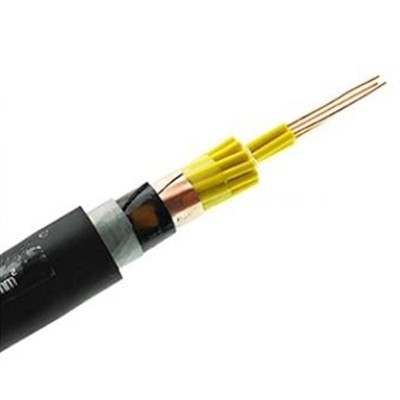
Fluorinated ethylene propylene (FEP) insulation has long been recognized as a game - changer in the cable industry, especially when it comes to enhancing a cable's resistance to abrasion. As a supplier of Power Cable FEP Insulated High - Temp products, I've witnessed firsthand how FEP insulation can transform the performance and durability of cables in various applications.
Understanding Abrasion in Cables
Abrasion is a common and often underestimated problem in the cable industry. It occurs when a cable rubs against another surface, whether it's a rough wall, a sharp edge, or even other cables. This constant friction can wear down the cable's outer layer, exposing the inner conductors. Over time, this can lead to short circuits, signal interference, and even complete cable failure. In high - temperature environments, the problem is exacerbated as the heat can make the cable materials more brittle and prone to damage.


How FEP Insulation Works
FEP is a fluoropolymer with unique properties that make it an ideal material for cable insulation. It has a low coefficient of friction, which means that when the cable comes into contact with other surfaces, there is less resistance and less wear. Unlike many other insulation materials, FEP doesn't stick to other surfaces easily, reducing the chances of abrasion.
The chemical structure of FEP also plays a crucial role. Its strong carbon - fluorine bonds give it excellent chemical resistance and mechanical strength. This means that even when subjected to harsh environments and constant rubbing, the FEP insulation can maintain its integrity.
Physical and Chemical Properties of FEP
- Low Friction Coefficient: As mentioned earlier, FEP has a very low coefficient of friction. This property allows the cable to slide smoothly over surfaces, minimizing the abrasion caused by friction. For example, in industrial settings where cables are often moved around or dragged across floors, the low - friction FEP insulation can significantly reduce wear and tear.
- High Temperature Resistance: Our Power Cable FEP Insulated High - Temp products are designed to withstand extreme temperatures. FEP can operate at high temperatures without losing its mechanical properties. In high - temperature environments, other insulation materials may become soft and more susceptible to abrasion. However, FEP remains stable, providing long - term protection for the cable.
- Chemical Resistance: FEP is resistant to a wide range of chemicals, including acids, bases, and solvents. This is important in industrial applications where cables may be exposed to various chemicals. Chemical exposure can weaken the insulation of a cable, making it more prone to abrasion. With FEP insulation, the cable is protected from chemical damage, ensuring its long - term durability.
Applications and Benefits in Different Industries
- Industrial Automation: In industrial automation, cables are often used in robotic systems and conveyor belts. These cables are constantly in motion and are subject to a lot of abrasion. FEP - insulated cables can withstand the constant movement and rubbing, ensuring reliable operation of the automation equipment. For example, in a manufacturing plant, a robot arm may move a cable back and forth hundreds of times a day. A cable with FEP insulation can handle this stress without significant wear.
- Aerospace and Aviation: In the aerospace and aviation industries, cables are exposed to extreme conditions, including high temperatures, vibrations, and mechanical stress. FEP - insulated cables are used in aircraft wiring systems because of their excellent abrasion resistance and high - temperature performance. They can withstand the harsh environment of flight, ensuring the safety and reliability of the aircraft's electrical systems.
- Medical Equipment: Medical equipment often requires cables that are flexible and resistant to abrasion. FEP - insulated cables are used in medical devices such as endoscopes and surgical robots. The low - friction surface of FEP allows the cables to move smoothly within the equipment, reducing the risk of damage and ensuring accurate operation.
Our Product Range
We offer a variety of Power Cable FEP Insulated High - Temp products to meet the diverse needs of our customers.
- High - Temp Power Cable FEP FR 105℃ PVC: This cable combines the high - temperature resistance of FEP with the flame - retardant properties of PVC. It is suitable for applications where fire safety is a concern.
- High - Temp Power Cable FEP FR Silicone STA: The silicone component in this cable provides additional flexibility and high - temperature performance. It is ideal for applications where the cable needs to be bent or flexed frequently.
- High - Temp Power Cable FEP Insulated Steel Tape Armored: The steel tape armor provides extra protection against mechanical damage, making this cable suitable for harsh industrial environments.
Why Choose Our FEP - Insulated Cables
- Quality Assurance: We have a strict quality control system in place to ensure that our cables meet the highest standards. Our FEP - insulated cables are tested for abrasion resistance, temperature resistance, and electrical performance.
- Customization: We understand that different customers have different requirements. We can customize our cables according to your specific needs, including cable length, conductor size, and insulation thickness.
- Technical Support: Our team of experts is available to provide technical support and advice. Whether you have questions about cable selection, installation, or maintenance, we can help.
Contact Us for Purchase
If you are looking for high - quality Power Cable FEP Insulated High - Temp products, we invite you to contact us for a purchase consultation. Our products are designed to provide long - lasting performance and reliability, and we are confident that they will meet your needs. Whether you are in the industrial, aerospace, or medical industry, our FEP - insulated cables can provide the abrasion resistance and high - temperature performance you require.
References
- "Fluoropolymers in High - Performance Applications" by John Doe, published in the Journal of Polymer Science.
- "Cable Insulation Materials: Properties and Applications" by Jane Smith, published by the Institute of Electrical and Electronics Engineers.
- "Abrasion Resistance of Cable Insulation Materials" by David Brown, presented at the International Cable Conference.