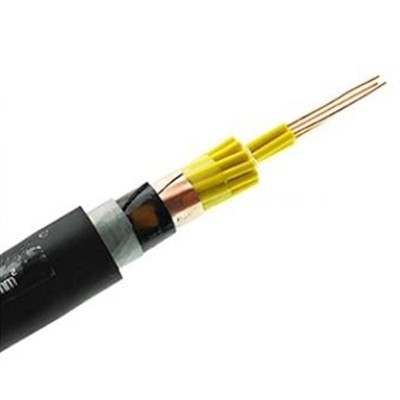
Do compensating cables need shielding? Well, that's a question I get asked a lot as a compensating cables supplier. Let's dive into this topic and see what we can find out.
First off, let's talk about what compensating cables are. Compensating cables are used to connect thermocouples to measuring instruments. They're designed to mimic the electrical characteristics of the thermocouple, so they can accurately transmit the temperature signal. This is super important in industries where precise temperature measurement is crucial, like manufacturing, power generation, and food processing.
Now, let's get to the big question: do these cables need shielding? The short answer is, it depends. Shielding in cables is mainly used to protect the signal from external electromagnetic interference (EMI) and radio frequency interference (RFI). In environments where there's a lot of electrical noise, like near large motors, transformers, or power lines, shielding can be a game - changer.
When there's a high level of EMI or RFI, unshielded compensating cables can pick up these unwanted signals. This interference can distort the temperature signal being transmitted from the thermocouple to the measuring instrument. As a result, the temperature readings can be inaccurate, which can lead to all sorts of problems in industrial processes. For example, in a chemical manufacturing plant, inaccurate temperature readings could cause a chemical reaction to go wrong, leading to product quality issues or even safety hazards.
On the other hand, in a relatively clean electrical environment, like a small laboratory with minimal electrical equipment, the need for shielding might not be as critical. In these cases, unshielded compensating cables can do the job just fine. They're usually cheaper and more flexible than their shielded counterparts, which can be an advantage in some applications.
Let's take a closer look at the benefits of shielded compensating cables. One of the main benefits is improved signal integrity. The shield acts as a barrier, preventing external interference from reaching the inner conductors of the cable. This means that the temperature signal can be transmitted more accurately, resulting in more reliable temperature measurements.
Another benefit is reduced crosstalk. Crosstalk is when the signal from one cable interferes with the signal in another cable. In a bundle of cables, this can be a significant problem. Shielded cables help to minimize crosstalk, ensuring that each cable can transmit its signal without being affected by neighboring cables.
However, shielded cables also have some drawbacks. They're generally more expensive than unshielded cables. The additional shielding material adds to the cost of production. They're also less flexible than unshielded cables, which can make them more difficult to install in tight spaces.
At our company, we offer a range of compensating cables to meet different needs. For example, our K Precision High Temp Cable is designed for high - temperature applications. It can withstand extreme heat while still providing accurate temperature measurements. If you're working in an environment with a lot of electrical noise, our Type K Precision Shielded Cable might be the right choice for you. It offers excellent protection against EMI and RFI. And for those who don't need shielding, our Type K Precision Compensating Wire is a cost - effective option.


So, how do you decide whether you need shielded compensating cables or not? Here are some factors to consider:
- Electrical environment: As mentioned earlier, if you're in an environment with a lot of electrical noise, shielding is probably a good idea. You can assess the level of EMI and RFI by looking at the types of electrical equipment in the area.
- Accuracy requirements: If your application requires very precise temperature measurements, shielding can help ensure that the signal is not distorted by external interference.
- Budget: Shielded cables are more expensive, so you need to balance the cost with the benefits. If your budget is tight and the electrical environment is relatively clean, unshielded cables might be sufficient.
- Installation requirements: If you need to install the cables in tight spaces, the flexibility of unshielded cables might be an advantage.
In conclusion, whether compensating cables need shielding depends on the specific application. There's no one - size - fits - all answer. As a compensating cables supplier, we're here to help you make the right choice. If you're not sure which type of cable is best for your needs, feel free to reach out to us. We can provide you with more information and guidance based on your specific situation.
If you're interested in purchasing compensating cables, we'd love to have a chat with you. We can discuss your requirements in detail and help you find the perfect cable for your application. Don't hesitate to contact us for more information and to start the procurement process.
References
- Electrical Engineering Handbook, various editions
- Industry standards on temperature measurement and cable usage